

Ask an HR team how many women joined the company last year, and they’ll probably have the figures ready. But ask whether those women feel heard in leadership meetings, receive fair opportunities for promotion, or feel comfortable disagreeing with their managers. The answers may not be so clear.
That’s where an inclusion audit can help.
An organization may have a diverse workforce on paper, but that doesn’t automatically mean everyone has an equal opportunity to contribute, grow, and feel valued. An inclusion audit helps businesses understand the difference between having a diverse team and creating a workplace where people genuinely feel included.
What Is an Inclusion Audit?
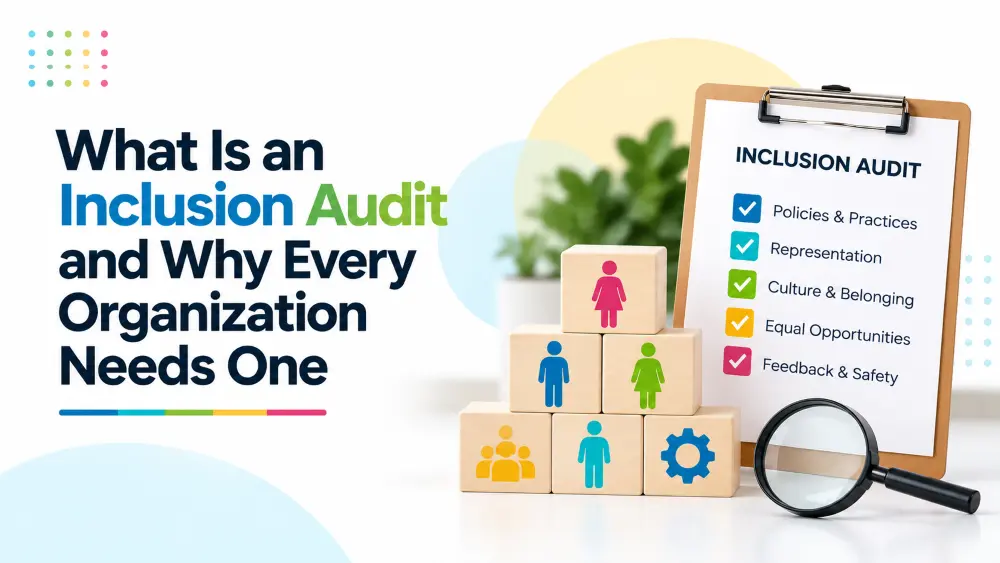
An inclusion audit is a structured review of how employees experience their workplace and whether the organization’s policies and everyday practices support fair treatment.
It goes beyond looking at who works in the organization. It examines how people are treated once they’re there.
For example, are employees given equal opportunities to lead projects? Do managers listen to different opinions during meetings? Does everyone get a fair chance to take on important projects, or do the same employees keep getting those opportunities? Do people feel comfortable raising concerns without worrying about how their managers might react?
These everyday experiences can reveal a lot about workplace culture.
A diversity audit generally focuses on workforce representation, while an inclusion audit looks more closely at employees’ experiences, access to opportunities, and sense of belonging. The two are connected, but they don’t measure exactly the same things.
Why Diversity Numbers Alone Don’t Tell the Whole Story
Imagine a company that appoints its first woman to a senior leadership position. The appointment improves its gender representation figures and may even be highlighted in the annual report.
However, important decisions continue to happen in informal conversations that she isn’t invited to. Her suggestions receive little attention, and she rarely gets the same opportunities as her colleagues.
Six months later, she resigns.
The organization may record her departure as another employee leaving the company, without examining what contributed to her decision.
This is one reason diversity figures need to be viewed alongside employee experiences. Hiring people from different backgrounds is important, but organizations also need to consider whether those employees can participate fully and progress in their careers.
Without that understanding, businesses may continue to recruit diverse talent while overlooking the workplace practices that make people feel excluded.
What Does an Inclusion Audit Examine?
A useful inclusion audit brings together employee feedback, HR records, and a review of workplace policies. Looking at these areas together helps organizations identify patterns rather than relying on assumptions.
1. Employee Feedback and Psychological Safety
An anonymous employee survey can help HR understand whether people feel respected, supported, and comfortable expressing their views.
Questions might explore whether employees can disagree with their managers, whether they have witnessed unfair treatment, and whether they trust the organization to handle complaints appropriately.
The aim is to understand employees’ experiences, not to single out individuals.
2. Workplace Policies and Everyday Practices
Policies may appear fair when they’re written, but their implementation can tell a different story.
An audit can review leave policies, flexible working arrangements, promotion criteria, grievance procedures, and employee benefits. It can also examine whether these policies work fairly for employees with different needs and circumstances.
For instance, a company may offer flexible working arrangements but still favour employees who stay late at the office when considering promotions. That gap between policy and practice deserves attention.
3. Representation and Career Progression
It’s useful to know how different groups are represented across departments and levels of seniority.
However, headcount alone isn’t enough. HR teams can look at how leadership responsibilities are distributed, which employees advance into higher positions, and whether some groups encounter obstacles that slow their professional growth.
If women are well represented in entry-level positions but rarely reach leadership roles, the organization needs to understand why.
4. Pay and Promotion Decisions
Compensation and promotion records can help identify differences in how employees are rewarded and recognized.
Where the data is available and appropriate to collect, organizations can compare pay, performance ratings, promotion rates, and access to development opportunities across relevant employee groups.
Any differences should be examined in context, taking into account factors such as role, experience, seniority, and responsibilities. The purpose is to identify unexplained gaps and determine whether further action is needed.
5. Exit Interviews and Employee Turnover
Employees who leave may be willing to share concerns they didn’t feel comfortable raising while they were still employed.
Exit interviews, employee feedback, and turnover data can help HR identify recurring issues, such as limited growth opportunities, poor management practices, or experiences of exclusion.
One person’s experience may not represent the entire organization, but repeated concerns across teams or employee groups deserve closer attention.
Recognizing these concerns can help employers identify what is driving employees away and decide where improvements are needed.
Why Should Organizations Conduct Inclusion Audits?
Inclusion audits are useful for more than meeting internal targets or reducing the risk of complaints. They can help organizations understand problems that affect employees and the way teams work together.
They help identify problems early. When employees don’t feel comfortable speaking up, concerns can remain hidden until they affect team relationships, project outcomes, or employee retention. An audit can give HR an opportunity to identify these issues and address them sooner.
They support fairer career opportunities. Reviewing promotion decisions, performance assessments, and access to training can help organizations spot patterns that might otherwise go unnoticed.
They can improve employee retention. When people repeatedly feel overlooked or believe their concerns aren’t taken seriously, they may start looking for opportunities elsewhere. Understanding these experiences gives employers useful information about where workplace improvements may be needed.
They help build trust in HR processes. Employees are more likely to take workplace policies seriously when they see that concerns are heard and that the organization follows through on its commitments.
An audit won’t solve these problems on its own. Its value comes from what the organization does with the findings. Management needs to act on the gaps indicated by the audits to create a truly diverse and inclusive culture
How Frequently Should Businesses Review Workplace Inclusion?
An inclusion audit should not be treated as a one-time exercise. Reviewing workplace inclusion regularly helps organizations understand whether their efforts are making a lasting difference.
The right frequency depends on the organization’s size, workforce, recent changes, and existing challenges. A company going through rapid growth or restructuring may need to review certain areas more frequently than a stable organization.
As a starting point, businesses could conduct a broader audit every 12 to 18 months and monitor key indicators in between.
Repeating the assessment also helps HR evaluate whether earlier changes are making a difference. For example, if the organization introduced a mentorship programme to support women in mid-level positions, are more women progressing into senior roles? Has employee feedback improved? Are retention patterns changing?
Comparing results over time helps organizations distinguish between initiatives that look promising and those that are actually helping employees.
How Can You Get Started With an Inclusion Audit?
Organizations don’t necessarily need a complicated assessment to begin. A focused review of a few important areas can provide useful insights.
Here are some practical first steps:
- Define the objective. Decide what the organization wants to understand, such as employee voice, fair promotions, workplace behaviour, or retention.
- Collect employee feedback. Use an appropriately designed anonymous survey and, where suitable, confidential conversations with employees from different teams and levels.
- Review existing data. Examine relevant HR records, workplace policies, promotion patterns, and employee turnover.
- Look for recurring issues. Compare the findings to identify gaps between what the organization intends to offer and what employees actually experience.
- Create an action plan. Prioritize a manageable number of changes, assign responsibility, and set realistic timelines.
- Measure progress. Review the results later to see whether the changes have improved employees’ experiences.
- Continuous Follow up : Follow with key stakeholders is needed to ensure changes are executed at ground level
Organizations may also choose to work with an external inclusion or an HR consultant. An independent reviewer can bring specialist expertise and may help employees feel more comfortable sharing sensitive feedback. However, confidentiality, appropriate data handling, and clear communication are important regardless of who conducts the audit.
What Happens After an Inclusion Audit?
The findings are only the beginning. The real work starts when the organization decides how to respond.
Suppose the audit reveals that employees are reluctant to disagree with senior managers. The response might involve training managers to invite different viewpoints, reviewing how meetings are conducted, and creating safer ways to raise concerns.
If the review identifies differences in promotion rates, HR may need to examine how performance is assessed and whether promotion criteria are being applied consistently.
Not every finding requires a major policy change. Sometimes, clearer communication or a small adjustment to an existing process can make a meaningful difference.
What matters is that employees can see their feedback being taken seriously and that the organization checks whether its actions are working.
Final Thoughts
A diverse workforce is an important starting point, but representation alone doesn’t tell an organization whether its employees feel respected, heard, and supported.
An inclusion audit helps HR look beyond the numbers and understand what employees experience in their day-to-day working lives. It can reveal gaps in policies, career opportunities, management practices, and workplace culture that might otherwise remain unnoticed.
The most useful audit isn’t necessarily the largest or most complicated one. It’s the one that helps an organization recognize where change is needed and follow through with practical action.
Because a workplace becomes more inclusive not simply when it hires people from different backgrounds, but when those people have a fair opportunity to contribute, develop, and succeed.